
Sneakers for Wide Feet. Which Shoes Should You Choose If You Have Wide Feet?
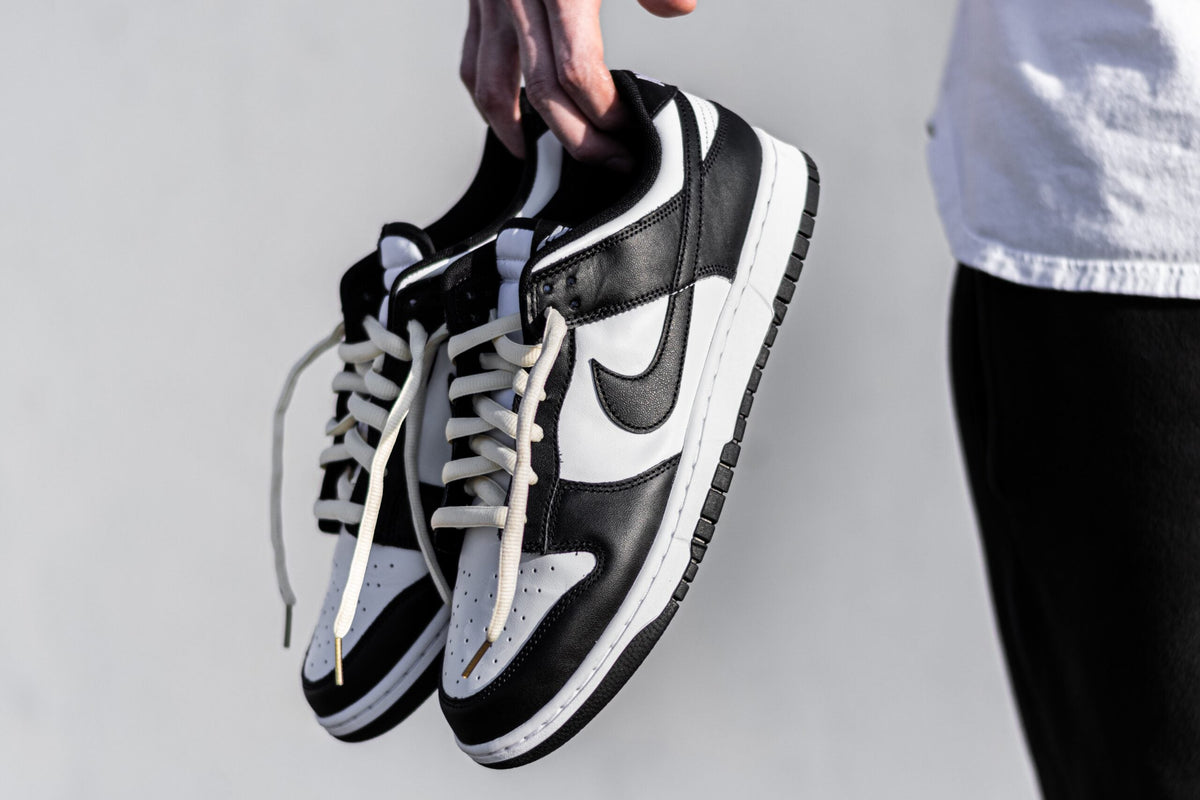
Some people find it harder to get the right sneaker size. The shoes fit perfectly in length, but not in width. Manufacturers often overlook this important issue, so footwear that is theoretically the right size can result in painful chafing and sores.
If you have wide feet, read the article below. We'll give you a few tips that may make your life a little easier.
Which Limited-Edition Shoes Should You Choose If You Have Wide Feet?
- Nike Dunk Low are considered kicks suitable for wide feet. If they're still too narrow, though, go for the SB version – originally designed for skateboarding. It is even wider than the “standard” release.

- New Balance 990v5 is a proven classic for people with wide feet, although it is comfortable for narrower feet as well.

-
Yeezy sneakers are also considered wide footwear. It's worth noting, though, that although they feel roomy inside, the shoe is slightly shorter in length than standard sizing. So remember to go up half a size or a full size so the shoe fits perfectly.

Yeezy Boost 500 Blush and adidas Yeezy Boost 350 V2 Bred Black-Red
How Can You Tell If You Have Wide Feet?
It's fairly simple – if you feel your feet are squeezed when putting on most shoes, it means you have wide feet.
In addition, shoes often chafe people with a high arch as well. To check whether this problem applies to you, do a water test.
Wet your foot, then step onto a sheet of paper. A foot with a “standard” arch will leave a print with a distinct indentation in the middle of the sole (the farthest point of the indentation should be roughly level with your second or third toe). If the indentation is shallower, you have a low arch, and if the indentation is deeper, your arch is high.
View on PinterestOnce you know you have wide feet and/or a high arch, keep it in mind and tell the salesperson who helps you choose shoes in the store.
Width Scale
Some manufacturers design their shoes around a width scale, which lets both a petite person who wears (say) size 39 and a person with a fuller build and the same foot size feel comfortable. Width is determined by several measurements:
- circumference across the instep,
- circumference of the forefoot (that is, just behind the toes),
- forefoot width and heel width.
This parameter is expressed with letters:
- Width F – shoes designed for very narrow feet, from which standard-width footwear usually slips off (or fits very loosely).
- Width G – for feet with a standard, neutral instep; it is found in most shoes on the market.
- Width H – much wider shoes, designed for people who have bunions, among other things.
Keep in mind, however, that not every manufacturer uses this scale.
What to Do If the Shoes You Bought Turn Out to Be Too Narrow?
Let's assume, hypothetically, that we bought shoes that are too narrow, that rub our feet raw when we walk, and that returning them is no longer possible.
This doesn't have to mean wasted money. There are several ways to stretch shoes. Not every pair can be stretched this way – the best candidates are those made of soft leather. It's always worth a try, though.
The first method is using heat. Put on very thick socks, then the too-narrow shoes. Use hot air from a hair dryer and carefully aim it at the shoes, paying special attention to the spots that pinch.
The second method is using cold. Fill plastic bags with water, seal them tightly and put them inside the shoes. Then put the shoes in the freezer. Because ice has a greater volume than water, it will gently push the shoes outward from the inside.
Proceed carefully and keep checking the condition of your shoes
Every pair of shoes, especially leather ones, “breaks in” a bit as you walk in it. This is a longer process, but we can help it along. Put on thick, damp (but not wet!) socks, then the shoes, and walk around the house. You can also stuff the shoes tightly with newspaper and leave them for at least 12 hours.
Everyone's feet are different, so it's hard to make generalized statements and give advice that will be right for everyone.
The best way to find out how comfortable a pair of shoes is to try them on several times and take a few steps on a clean floor, or to ask the qualified advisors at a specific store for advice.
Related articles
 Guides
Streetwear Winter Hats
Winter hats – warmth and style in one. In winter, the right hat is not just a matter of fashion, but above all of comfort
 Guides
adidas – Timeless Sneakers
Classic adidas models: Samba, Gazelle, Campus, Spezial. The adidas brand, founded in 1949 by Adi Dassler, quickly gained fame thanks to
 Guides
Air Jordan 4 – Iconic Sneakers
Air Jordan 4 – History, Popular Models and a Beginner’s Guide Air Jordan 4 is an iconic sneaker model that for


